Ice removal and temporary relief
Clearing the ice at the roof edge and, where needed, opening channels so meltwater can leave. It deals with a leak in progress and nothing more, so the dam can form again in the next cold snap.
Ice removal, leak repair and the attic fixes that stop ridges of ice forming at Newton eaves.
Fastest: call (833) 751-2102. Or send this and we call you back.
An ice dam is a ridge of ice at the roof edge that traps meltwater and forces it under the shingles. Newton Roofing puts you through to an independent local roofer who can remove the ice, repair any leak and look at the attic heat loss that caused it. In Newton, this is a winter call.

The pattern is familiar to anyone who has lived through a Boston-area winter. Snow falls, the house warms the roof from below, the snow melts on the upper slope and the water runs down to the eaves, where the overhang is cold and the water freezes again. Over days, that edge builds into a ridge of ice, and the water behind it has nowhere to go but under the shingles and into the house.
Boston averages about 43.8 inches of snow a year, and the winter of 2014-15 produced 108.6 inches, with 34.3 in January and 64.8 in February. In a season like that, a house with a leaky attic can grow an ice dam on every side. In a lighter year, the same house may only get one at the north-facing corner.
There are two jobs here, and they are done by different people at different times. One is getting the ice off and the leak stopped now, which is a roofer's work. The other is fixing why the roof is warm, which usually means air sealing, insulation and ventilation in the attic. Call (833) 751-2102 and Newton Roofing will put you through to an independent roofer who serves your town.
Heat from the living space and air leaks warm the roof deck, melting the snow above the cold eaves; the water then refreezes at the edge. The state's ice dam guidance names poor insulation, air leaks from recessed lights, ducts and hatches, and poor ventilation as the usual causes.
The roof does not cause the problem by itself. A well-sealed, well-insulated, well-ventilated attic stays close to the outside temperature, so snow melts slowly and evenly, or not at all. A leaky one acts like a heater under the roof.
That is why repeating the same repair each winter is a poor plan. Clear the ice and patch the leak, and the next cold snap can build the same dam in the same place.
Under 780 CMR R905.1.2, where there is a history of ice forming along eaves, asphalt shingle, slate and wood roofs need an ice barrier: two cemented layers of underlayment or a self-adhering polymer-modified bitumen sheet, from the eave to at least 24 inches inside the exterior wall line.
Which communities have that history is designated in Table R301.2(1) of the code. Ask your roofer and the Newton building department how it applies to your address, and have it written into the scope of any re-roof.
An ice barrier protects the boards, but it does not stop ice forming. It is the second line of defense behind a properly sealed attic. The guide on ice dams in Newton walks through both sides.
It is not a job to take on from a ladder. Hacking at ice can damage shingles, and falling ice, wet footing and a frozen roof all cause injuries. A safer step is to catch and photograph the water inside and call a roofer; a roofer's method of removal is chosen to avoid damaging the roof.
Pulling at ice from a ladder brings the ice down on you, and a ladder on a frozen path is its own hazard. Keep well clear of the eaves in freezing weather.
Heat cables and similar products come up often. A roofer or an energy assessor can tell you whether they suit your roof, but they treat a symptom and not the heat loss behind it.
Mass Save offers a home energy assessment, and its pages list air sealing and insulation incentives that address the heat loss behind ice dams. Terms change, so check current eligibility with Mass Save directly. The assessment is a look at the house, not a roofing job.
The state's ice dam leaflet and Mass Save both point to the same remedy: seal the air leaks first, then add insulation, then check the ventilation. Done in that order, it usually costs less than doing insulation first and leaving the air leaks open.
A roofer can tell you what they see in the attic and which of those tasks belong to the roof. For the attic side, the attic ventilation and insulation page is the place to start.
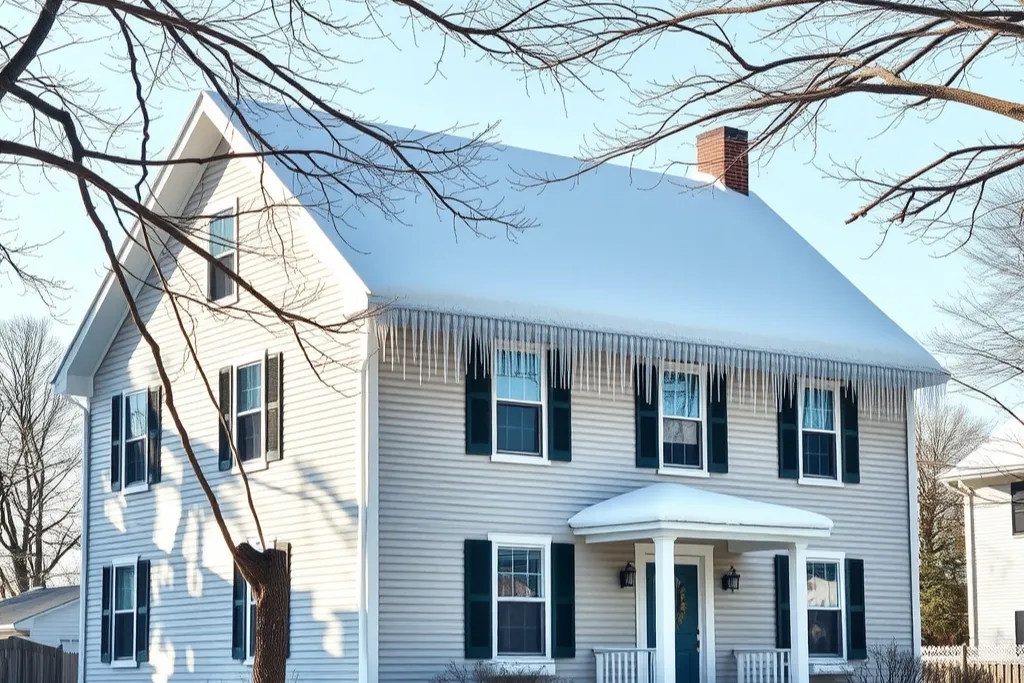
Do not climb a ladder to chip or pull at ice, and do not stand under icicles or at the eaves in freezing weather. Ice and snow can fall without warning, and a wet, frozen roof is slippery. Stay inside, catch the water, photograph the damage and call.
Say which side of the house it is, how thick the ice looks, and where you see water inside. A roofer wants to know whether the water is on an exterior wall, at a ceiling or in the attic, because that points to the part of the roof that is overloaded.
If water is entering the house, the roofer may remove ice from the edge to open a channel for the meltwater. The aim is to clear a path without cracking the shingles or damaging the gutters, and a roofer who offers to chip at the ice with a hammer is not the one to hire.
When the weather allows, the roofer checks the shingles, the eaves and the flashing for the places where water has been pushed through. Damaged shingles are replaced, and the roofer tells you if wet boards or insulation need attention.
Heat and air leaks from the living space melt the snow. A roofer checks for gaps around recessed lights, ducts and the attic hatch, for thin insulation and for blocked soffit vents. Some will advise you to have a home energy assessment done as the next step.
That can mean air sealing and insulation by an insulation contractor, ventilation work and, where the roof is being re-covered, an ice barrier along the eaves. The roofer's quote should name which of those parts belong to the roof and which belong to someone else.
Clearing the ice at the roof edge and, where needed, opening channels so meltwater can leave. It deals with a leak in progress and nothing more, so the dam can form again in the next cold snap.
A waterproof layer under the shingles along the eaves protects the boards from backed-up water. It is installed during a re-roof or a larger repair, and it is the roof's own defense once water has reached it.
Air sealing, insulation and ventilation reduce the heat reaching the roof deck, so the snow melts less on the upper slope. It is the cure for the cause, and the attic ventilation and insulation page covers it in detail.

Ice dam work spans a quick visit to remove ice and a larger project on the roof or attic. No dollar figure appears here, since the range between the two is wide.
| Job | Typical range | What it includes |
|---|---|---|
| Ice removal | Quoted per visit | Depends on how much ice, how high the edge is and how many sides of the house are affected |
| Leak repair after the dam | Set after inspection | A few shingles is a small job; a stretch of wet boards along the eaves is a larger one |
| Ice barrier along the eaves | Part of a re-roof or larger repair | Cost follows the length of the eaves and the roof access |
| Air sealing, insulation and ventilation | Quoted by that contractor | This is attic work, often separate from the roofer; Mass Save lists a home energy assessment and rebates on insulation |
Your exact price is confirmed on site before any work starts. Check current Mass Save terms yourself, since eligibility and rebates change.
If it's an emergency, call now. For non-urgent ice dam prevention and repair, send the form and we'll call you back.
Newton's housing age is the starting point. With a median build year of 1942 and about 49 percent of homes built before 1940, a lot of attics here have been altered over the decades with new wiring, ducts and lighting, and each opening is a possible path for warm air into the cold part of the roof. The state's ice dam guidance lists exactly those leaks.
Roof shape matters as well. A house with several roof levels, a valley between two slopes or a dormer that meets a wall gives snow and ice more places to collect, and a slate or cedar roof on a historic house in Waban or Chestnut Hill calls for a roofer who works with those materials.
Newton sees both heavy and light winters. The record 2014-15 season is on the books, and so is the January 2018 bomb cyclone, which brought at least 17 inches of snow to Boston. Whether this winter brings one ice dam or six, the house either has the attic problem or it does not.
Soffit and ridge venting, baffles and attic air leaks: the cure the state's ice dam guidance points to for roofs that melt snow from below.
Leak tracing and repair for Newton roofs, from chimney and valley leaks to meltwater that backs up at the eaves.
Re-hanging, replacing and clearing gutters that snow, ice and leaves load down on wooded Newton-area lots.
Not sure if you're covered? Check your ZIP code.
Ice dams form when heat from the living space and air leaks melts snow on the warm part of the roof, and the water refreezes at the cold eaves.
The side that gets sun melts snow faster, and the heat from the attic is rarely even. A roof valley, a chimney, a bathroom fan or a stretch with thin insulation can warm one slope more than another. The ice forms where the warm part of the roof meets the cold edge.
It is not recommended. Chemical de-icers can stain or damage roofing, gutters and plants, and they melt a small channel without addressing the cause. A roofer can remove the ice in a way that protects the shingles. Ask what method the roofer plans to use.
Insurers decide that under each policy, and many treat sudden water damage differently from long-term maintenance problems. Take photographs, keep receipts for any emergency work and ask your insurer what they need. Neither Newton Roofing nor the roofer can say what will be covered.
Not by itself. A new roof with an ice barrier along the eaves protects the boards if water backs up, but ice dams form because of heat and air leaking from the living space. The attic side needs attention as well, ideally starting with air sealing.
Mass Save offers a home energy assessment that looks at insulation, air leaks and ventilation, which are the main causes of ice dams. It is a sensible step if dams have returned after a roof repair. Check Mass Save for current terms and for what it offers.
As soon as the weather and the roofer's schedule allow. Wet boards and insulation do not dry well in a cold attic, and the next thaw can send more water in. Call, describe what you see, and ask when a roofer can look. No arrival time can be promised.